



A summer rhythm where keiki build confidence without pressure

Ages 8-12, live online, small cohort support, and a clear weekly flow that gives keiki room to create, reflect, and speak with confidence.

12 weeks

Enough time to slow down, think deeply, and finish a meaningful project.

Live online

Fully virtual with live instruction, discussion, and guided feedback from home.

Small cohort

Every child is seen, heard, and supported without pressure to perform.

Ages 8–12

No prior design, art, or technology experience required.

Real final project

Each child presents a mobile app prototype shaped from their own idea.

Thoughtful pace

Immersive but never rushed. Space to think, create, and grow with care.

This summer, your keiki can use technology with judgment

Many Hawaiʻi families want their children ready for the future without losing connection to people, place, and purpose. In this 12-week camp, keiki move from a real problem to a mobile app prototype while learning to think like designers, speak with confidence, and use AI as a tool, not a shortcut. No experience needed. Just curiosity.
For families who want future-ready but grounded keiki

For families who want future-ready but grounded keiki

You want your child prepared for technology without letting technology raise them.

You want future-ready skills that still feel grounded in humility, care, and community.

You want your keiki to think beyond themselves: Who does this help? What does this affect? What is my kuleana?

You want confidence without constant performance, comparison, or pressure to be perfect.

You want school break to feel meaningful, not like more scrolling, more passive watching, or more rushed activities.

You want your child to learn how to explain their thinking, not only finish an assignment.

Child drawing Earth on blue paper

Kuleana, ʻāina, and care for people and place

Kuleana: children practice designing with responsibility, not just personal preference.

Aloha ʻāina: they think about people, land, resources, and the impact of what they create.

Collective thinking: the question becomes "Who does this help?" instead of only "What do I want to make?"

Purpose: projects are not disposable assignments. They become practice in care, clarity, and usefulness.

Voice: keiki learn to explain what they see, why it matters, and how their idea can serve.

A calm path to design with responsibility

The program starts with imagination and care, then guides keiki toward a full mobile app concept they can explain with confidence.

Purpose

Creative invention challenges that stretch imagination and logic. Children learn that even the wildest ideas need structure, care, and a reason for existing.

What they learn

  • Ask "what if" questions that open up new possibilities
  • Think in systems and see how parts connect
  • Identify needs, limits, and resources in a design challenge
  • Sketch early ideas visually to communicate thinking

Benefits

  • Creative courage
  • Systems thinking
  • Visual communication
  • Structured imagination

Purpose

Children shift into human-centered design — solving real problems for elderly users, people with disabilities, families, and communities with specific needs.

What they learn

  • Design from another person's perspective
  • Identify the real needs behind a problem
  • Simplify ideas so they become more useful
  • Balance creativity with empathy, function, and kuleana

Benefits

  • Empathy
  • Human-centered design
  • Accessibility thinking
  • Kuleana in action

Purpose

Before designing an app, they need to know what story it tells, who it serves, and what problem it solves. This is where "cool ideas" become meaningful directions.

What they learn

  • Express ideas clearly through story and visual art
  • Define a user and a real need for their app concept
  • Choose one strong concept to develop further
  • Connect emotion, purpose, usefulness, and community impact

Benefits

  • Storytelling
  • Concept clarity
  • User definition
  • Creative direction

Purpose

The app design process begins. Children plan structure, create paper wireframes, and map out simple user flows so their idea becomes clear enough for someone else to use.

What they learn

  • What a home screen does and how users navigate
  • How users move from one screen to another
  • What buttons, menus, and actions are for
  • How to simplify an idea so it becomes useful and buildable

Benefits

  • UX planning
  • Wireframing
  • User flow thinking
  • Information architecture

Purpose

Paper ideas become digital layouts. This is where their project starts to feel real and where children learn that clarity is a form of care.

What they learn

  • Recreate paper ideas as digital screen layouts
  • Organize screens clearly for a better user experience
  • Improve layout, flow, and usability of their designs
  • Think about what the user sees, feels, and does next

Benefits

  • Digital design tools
  • Interface layout
  • Usability thinking
  • Analog-to-digital translation

Purpose

AI is introduced as a tool to question and guide — not a shortcut that replaces thought, responsibility, or judgment.

What they explore

  • How clear prompts shape better outcomes
  • How AI can help brainstorm names, features, and ideas
  • How to compare strong and weak AI outputs
  • Why human creativity, empathy, and judgment still come first

Benefits

  • AI literacy
  • Prompt thinking
  • Critical evaluation
  • Thoughtful technology use

Purpose

Everything comes together. They present their app, explain their process, and leave with something they shaped from their own thinking.

What they present

  • The problem their app solves and who it is for
  • How the app works and what their screens do
  • How their idea improved over the course of the program
  • A simple interactive prototype they can proudly share with family

Benefits

  • Presentation skills
  • Prototype completion
  • Reflective thinking
  • Creative confidence
What keiki carry forward: voice, confidence, and kuleana

What keiki carry forward: voice, confidence, and kuleana

Creative confidence rooted in their own voice, not comparison

Real problem-solving habits they can bring back to school, family, and community

Empathy — they design for someone else's needs, not just their own preferences

A mobile app prototype they shaped from a real idea

Comfort explaining ideas clearly and receiving feedback with openness

A healthy, grounded relationship with AI: useful, questioned, and never in charge

AI with judgment, not shortcuts

AI with judgment, not shortcuts

They learn prompting, not just clicking.

They compare strong and weak AI outputs side by side.

They brainstorm with AI, then improve the ideas with their own judgment.

They understand why confident answers are not always careful or true.

Human creativity, empathy, and kuleana come first.

Your child’s voice matters

We built this program for families who want their children ready for the future, but still grounded in care.

Keiki are growing up with powerful tools all around them. They can watch, scroll, ask AI for answers, and move quickly from one thing to the next. But speed is not the same as wisdom. Technology is not the same as judgment.

This camp gives children a different rhythm. They slow down. They notice. They ask who their idea serves. They practice kuleana by shaping something useful, thoughtful, and clear.

By the end, the thing we hope parents hear is not only "I made an app." It is: "I know why my idea matters."

The Team Behind Future Designers
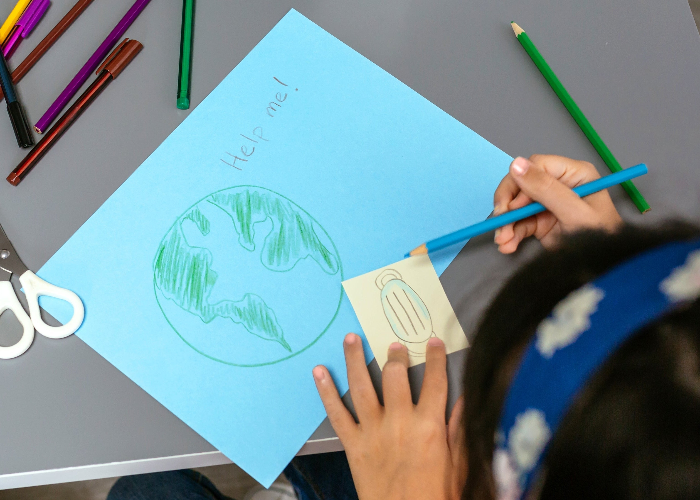
Child drawing Earth on blue paper

What parents ask before their keiki begin

Still wondering whether this is right for your child? Reach out directly.

Not at all. The program is built from the ground up for beginners. We start with imagination and invention — no screens required in the first weeks. Everything is introduced gradually, with guidance at every step.
A computer with internet access and a webcam. We use beginner-friendly, free design tools that we introduce during the program. No software purchase required.
Coding camps teach syntax. This teaches thinking. Children learn design thinking, empathy, storytelling, and problem-solving — then apply those skills to create a mobile app concept. There is no coding involved. The focus is on how ideas are shaped, structured, communicated, and connected to real needs.
Each session is live and interactive. Children share their work, discuss ideas as a group, receive guided feedback, and work on hands-on challenges. It feels more like a small studio than a lecture: calm, structured, and participatory.
We keep cohorts small so every child matters. If your child needs to miss a session, we provide a summary and catch-up guidance so they can rejoin smoothly the following week.
They will finish a simple interactive prototype — a working concept of their app with real screens, navigation, and design decisions. It will not be a published app, but it will be something they designed, shaped, and can present with confidence.
AI is introduced as a creative thinking tool — not a replacement for their own ideas. Children learn how to write better prompts, evaluate AI suggestions critically, and understand why human judgment still matters most. It is guided, age-appropriate, and designed to build awareness, not dependence.
Cohorts are kept intentionally small — typically under 12 children — so that every child gets individual attention, feedback, and the space to participate meaningfully.
No. The camp is online and open to families in different locations. But this page is written especially for Hawaiʻi families who want future-ready skills taught in a way that still feels grounded in care, purpose, and community.
No. This is a design and technology camp. We use words like kuleana and aloha ʻāina with respect because they name values many local families already care about: responsibility, care for people and place, and thinking beyond yourself.

Choose the path that fits your keiki

Both programs share the same foundation. The summer camp goes further.

Feature
8-Week Core Program
12-Week Summer ProgramYou're here
Format
Weekly online program
Immersive online summer camp
Length
8 weeks
12 weeks
Pace
Steady, foundational, intentional
Deeper, more immersive, project-driven
Main focus
Creative thinking, empathy, design foundations, early AI
Creative thinking + full mobile app journey
Starting point
Invention, storytelling, design challenges
Starts with the same foundation, then goes further
App design depth
Intro to simple app thinking
Full guided path to a mobile app prototype
Final outcome
A strong concept, early design thinking, simple project work
A simple prototyped mobile app and final presentation
Best for
Families wanting a strong weekly foundation
Families wanting a richer summer project and bigger transformation
Experience level
No experience needed
AI exposure
Gentle introduction to AI as a creative tool
More integrated use of AI in brainstorming and app ideation
Child experience
Builds confidence and core thinking habits
Builds confidence plus momentum toward a substantial final project

Format

8-Week Core Program Weekly online program
12-Week Summer Program Immersive online summer camp

Length

8-Week Core Program 8 weeks
12-Week Summer Program 12 weeks

Pace

8-Week Core Program Steady, foundational, intentional
12-Week Summer Program Deeper, more immersive, project-driven

Main focus

8-Week Core Program Creative thinking, empathy, design foundations, early AI
12-Week Summer Program Creative thinking + full mobile app journey

Starting point

8-Week Core Program Invention, storytelling, design challenges
12-Week Summer Program Starts with the same foundation, then goes further

App design depth

8-Week Core Program Intro to simple app thinking
12-Week Summer Program Full guided path to a mobile app prototype

Final outcome

8-Week Core Program A strong concept, early design thinking, simple project work
12-Week Summer Program A simple prototyped mobile app and final presentation

Best for

8-Week Core Program Families wanting a strong weekly foundation
12-Week Summer Program Families wanting a richer summer project and bigger transformation

Experience level

8-Week Core Program No experience needed
12-Week Summer Program No experience needed

AI exposure

8-Week Core Program Gentle introduction to AI as a creative tool
12-Week Summer Program More integrated use of AI in brainstorming and app ideation

Child experience

8-Week Core Program Builds confidence and core thinking habits
12-Week Summer Program Builds confidence plus momentum toward a substantial final project

Give your keiki room to create with kuleana

Registration is open for summer. Small cohorts keep the experience personal, calm, and meaningful.
kid summer camp