Is rug tufting hard? Time, cost and difficulty
Short answers for doing it at home and for trying it in a class.
At home
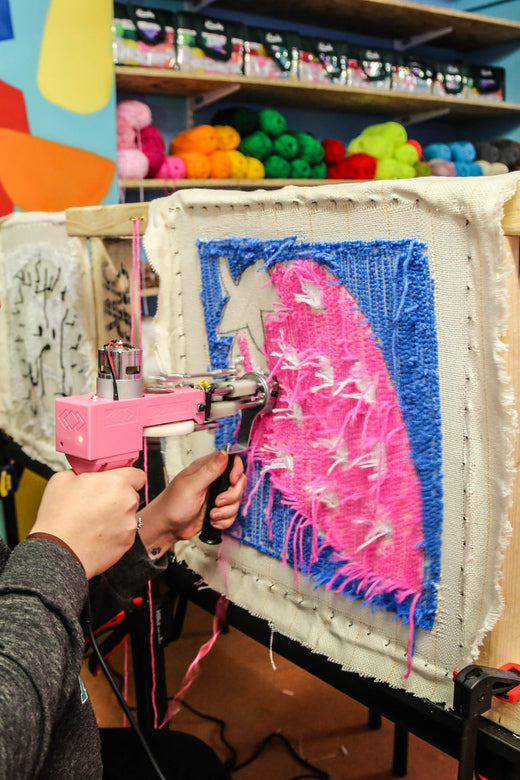
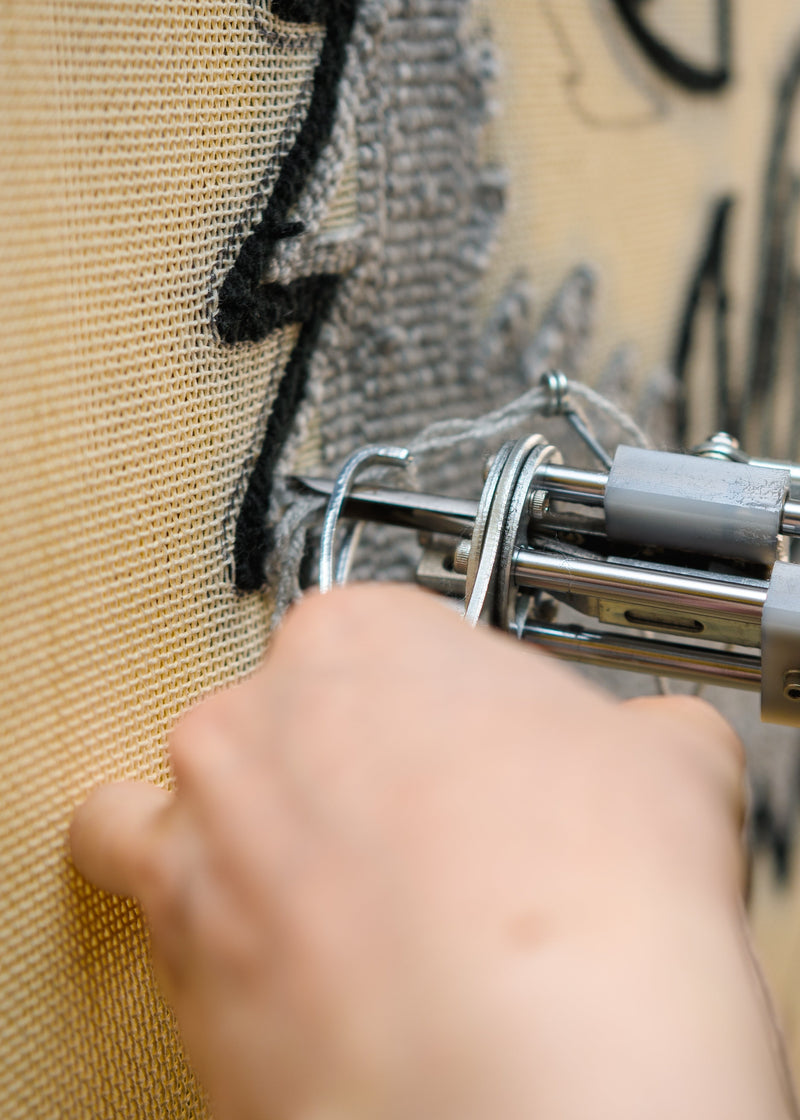
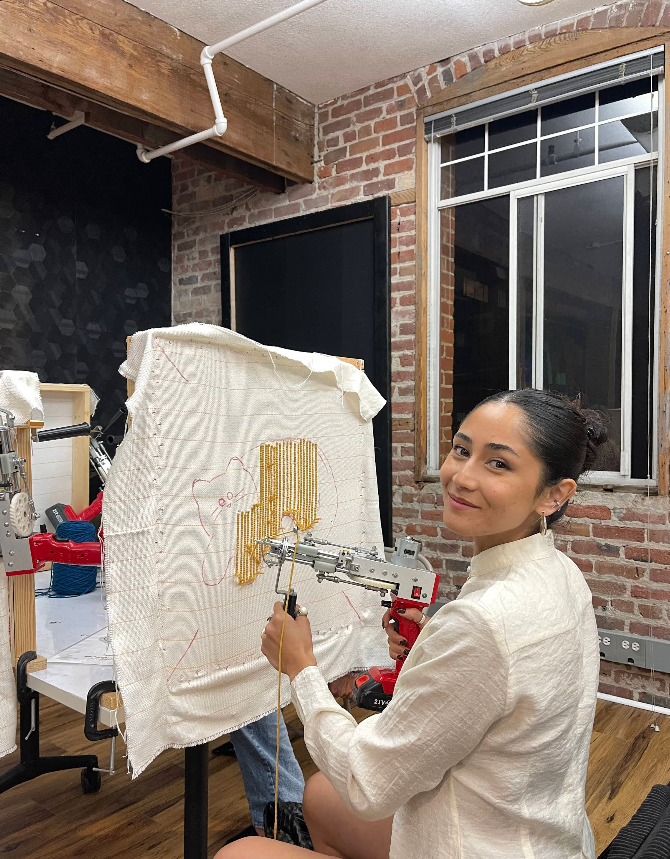
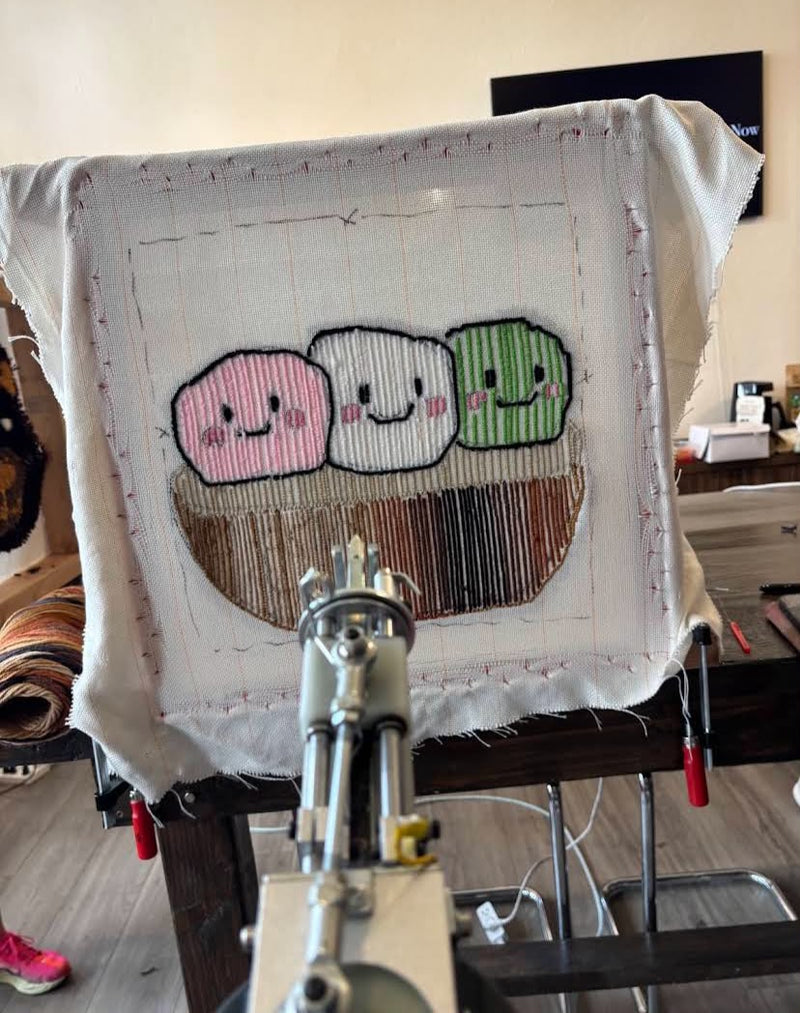
The gun itself is easy to learn. It works a bit like a handheld sewing machine. The hard parts are the setup and the finishing: stretching the cloth tight enough, keeping your speed and pressure even so the pile is consistent, and gluing and edging the back neatly. Mistakes are forgiving. You can pull the yarn out and tuft the spot again.
In a class
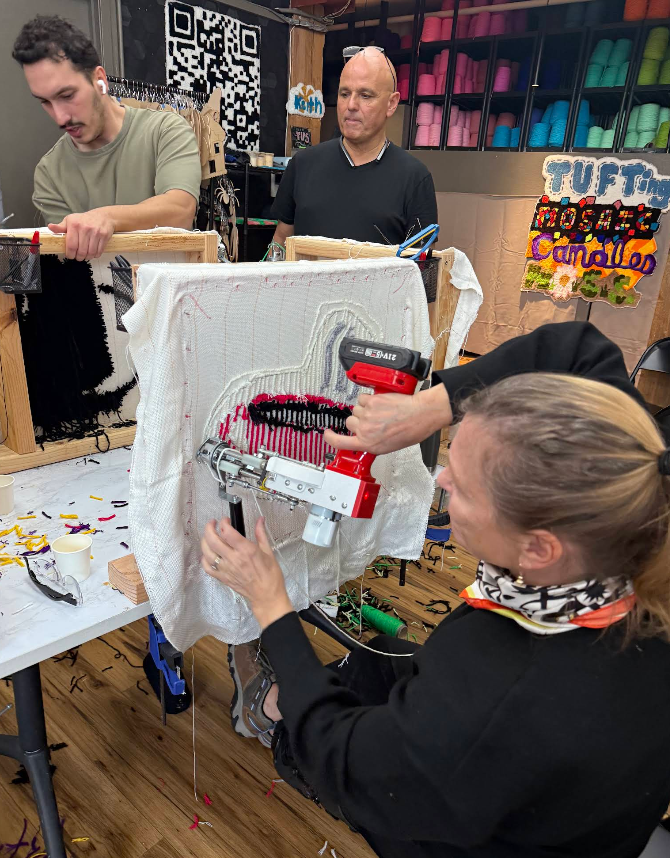
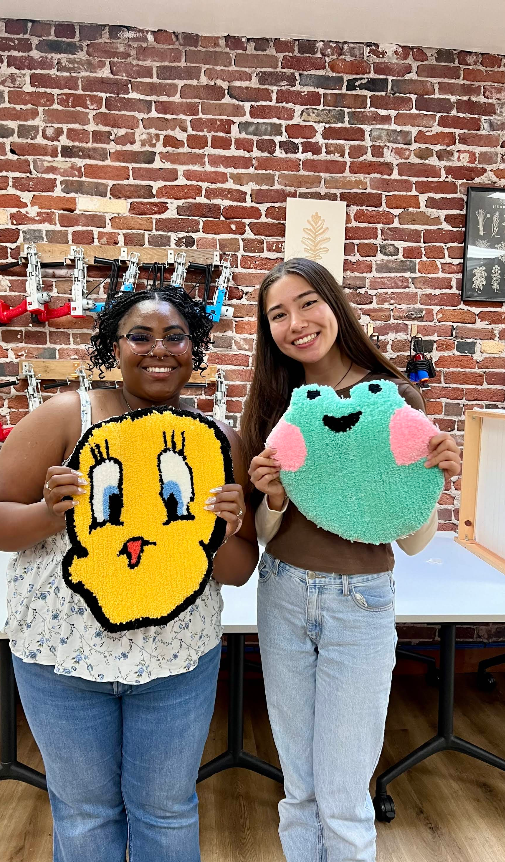
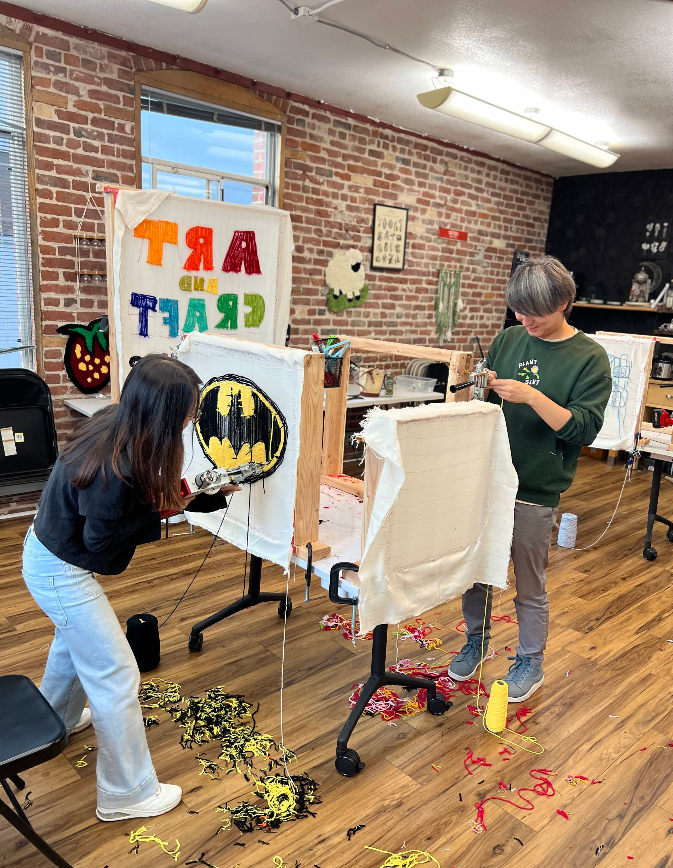
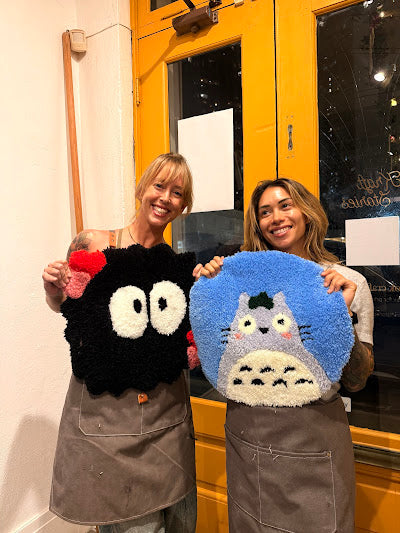
Rug tufting is a good craft for beginners. In our classes the frame comes stretched and ready, you get a safety demo before you touch the gun, and an instructor helps you simplify your design into something you can finish in one session. No experience needed.
At home
A small rug can be tufted in a few hours. Add time to draw the design, then at least 24 hours for most glues to dry before you back and trim it. So even a small first piece usually spans two days. Bigger rugs take longer at every stage.
In a class
Our tufting classes run 2.5 to 3 hours depending on the studio. That covers choosing a design, learning the gun and tufting your piece, with the instructor nearby the whole time.
At home
The tufting gun is the big purchase. A solid beginner machine costs a few hundred dollars; guns and starter kits listed on Google Shopping in November 2026 ranged from about $105 to $445. You also need a frame, tufting cloth, yarn, latex glue and backing, and yarn is the biggest ongoing cost. High-pile pneumatic guns also need an air compressor, which adds a few hundred dollars more.
In a class
Our classes cost from $89 to $129 per person, with the gun, frame, yarn and all materials included. It’s an inexpensive way to find out whether you like tufting before you buy a gun.
At home
A tufting gun is a powered tool with a fast needle, and cut-pile guns have built-in scissors. Keep your fingers away from the tip, switch it off before you rethread, and expect it to be loud.
In a class
Every session starts with safety instruction: how to hold the gun, how to control the trigger and what to avoid. Instructors stay in the room the whole time, correct technique early and step in if something looks unsafe.