Rug tufting is the fastest way to make a real rug by hand. A tufting gun pushes yarn through a stretched fabric backing hundreds of times a minute, so a beginner can finish a small rug in an afternoon instead of the weeks hand-hooking takes. This guide covers the tools, the costs, the step-by-step process, the mistakes that ruin first rugs, and where to try it with a gun and a frame already set up before you spend $300 on your own.
What rug tufting is
Tufting is a textile technique where loops of yarn are punched through a backing fabric from the back, so the design appears on the front. The yarn is held in place by friction at first, then permanently by a layer of latex glue and a secondary backing. Most machine-made carpet is tufted; the hand-held tufting gun lets you do the same thing at home, one line at a time, in any shape or colour you like.
There are two kinds of gun. A cut-pile gun has a blade that trims each loop as it goes, giving the soft, shaggy surface most people picture. A loop-pile gun leaves the loops intact for a tighter, more durable, slightly nubbly texture. Beginners usually start with cut pile.
Tools and materials
- Tufting gun: $150–$350. Cut-pile models (the AK-I and its many clones) are the standard first gun.
- Tufting frame: a wooden frame with carpet tack strips or nails along the inside edge to hold the fabric drum-tight. Buy one ($60–$150) or build one from 2x4s and tack strip.
- Primary backing: monk's cloth or a purpose-made tufting cloth with a visible grid. Avoid burlap, which tears.
- Yarn: acrylic or wool, 2–4 strands fed at once for full coverage. A 2 x 2 ft rug uses roughly 1.5–2 lb of yarn.
- Yarn feeder or threader to guide strands into the gun.
- Adhesive: carpet latex adhesive or a flexible craft glue, applied with a spreader.
- Secondary backing: felt, canvas or non-slip rug backing, glued to the back after the latex cures.
- Finishing tools: duckbill scissors or electric carpet shears for trimming the pile, a projector or marker for transferring the design.
All in, a first home setup runs $350–$600. That is why most people take a class first: a studio supplies the gun, frame, backing and yarn, and you find out in two hours whether you like it.
How to make a tufted rug, step by step
1. Stretch the backing on the frame
Hook the primary backing over the tack strips on all four sides, pulling evenly until it is tight enough to bounce a coin. A loose backing lets the gun push the fabric away instead of punching through it, which is the number one cause of skipped stitches.
2. Transfer your design
Remember that you work from the back, so the design must be mirrored. Project the image onto the frame and trace it with a permanent marker, or draw freehand. Simple shapes with bold outlines and three to five colours tuft far better than fine detail.
3. Thread the gun
Feed two to four strands through the yarn guide and into the needle. Keep the cones on the floor behind you so the yarn feeds without snagging.
4. Tuft the outlines first
Hold the gun perpendicular to the cloth, press the foot firmly against the backing, and pull the trigger while moving slowly in the direction the needle points. Outline each colour block first, then fill it in with tightly spaced passes. Every row should touch the last; gaps show through on the front.
5. Check the front as you go
Walk around the frame every few minutes. Thin spots are easier to fix now than after gluing. Rows pushed too close together will pop the neighbouring loops out, so aim for rows that touch, not overlap.
6. Glue the back
With the rug still on the frame, spread a thin, even layer of latex over the entire back. Press the secondary backing on while the glue is wet, smooth out air bubbles, and leave it to cure for 12–24 hours. Cutting it off early is how rugs shed.
7. Cut, trim and shear
Cut the rug off the frame, leaving a 2 cm border of cloth to fold and glue under. Then trim the pile. Scissors work for small rugs; electric shears give the level, carved look you see in shops. Carving a shallow groove along colour borders makes the design pop.
How long it takes
- Small piece (12 x 12 in): 1–2 hours of tufting plus overnight curing.
- Two-foot rug: a full afternoon.
- Large rug (4 ft and up): a weekend, with a lot of yarn.
Mistakes that ruin first rugs
- Loose backing: skipped stitches and torn cloth. Stretch harder.
- Tufting toward yourself: the gun only works moving in the direction the needle faces.
- Forgetting to mirror text: letters come out backwards on the front.
- Thin glue: the rug sheds. Cover every strand.
- Trimming before curing: the pile pulls out with the scissors.
- Too many colours: every colour change is a stop, re-thread and start. Three to five is plenty.
Try tufting before you buy the gear
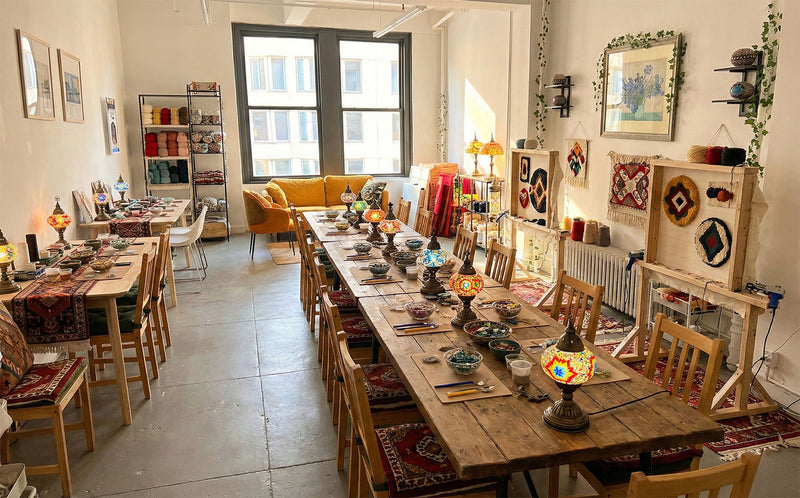
A two-and-a-half-hour class is the cheapest way to find out whether you want a $500 setup at home. Our rug tufting classes provide the gun, frame, backing and yarn, draw your design on the canvas before you arrive, and you take a finished, backed rug piece home the same day. Public classes run weekly; private sessions host teams of 10 to 60.
- Rug tufting class in San Jose — the largest tufting class in the South Bay, up to 24 per public session
- Rug tufting class in San Francisco (SoMa)
- Rug tufting class in NYC (Midtown) and Financial District
- Rug tufting class in Austin
- Rug tufting workshop in Honolulu
- Rug tufting team building in the Bay Area and in NYC
Read more about the craft on our rug tufting page.
Frequently asked questions
Is rug tufting hard for beginners?
No. The gun does the work; the skill is in keeping the backing tight, moving slowly and filling evenly. Most first-timers finish a small piece in a single session.
How much does it cost to start rug tufting at home?
About $350–$600 for a gun, frame, backing cloth, yarn, glue and shears. A class costs $89–$129 and includes everything.
What is the best backing fabric for tufting?
Monk's cloth or a dedicated primary tufting cloth with a printed grid. Both hold the stitches and survive the tension of the frame.
Can you tuft a rug without a tufting gun?
Yes, with a punch needle, but it is roughly ten times slower. A gun is what makes a full rug realistic in a day.
Do tufted rugs shed?
Only if the glue layer is thin or trimmed before curing. A properly glued rug with a secondary backing holds its pile for years.