The Craft
How Perfume Making Works
Three ideas carry you most of the way: notes evaporate in layers, every perfume is a concentrate plus a carrier, and a blend needs time to settle.
Top notes
Also called head notes. Small, light molecules that evaporate quickly and make the first impression. Think citrus, mint and lavender.

Heart notes
Also called middle notes. They emerge as the top fades and form the main body of the perfume: florals such as jasmine and rose, plus spices and green notes.

Base notes
Rich, heavy materials such as woods, resins, musk and vanilla. They give depth, are often not noticed until about 30 minutes after you apply, and last longest.

Aromatic oils
Essential oils and absolutes for a natural perfume, or fragrance oils, which can include synthetic materials. Check that every oil is suitable for skin.

A carrier
Perfumer's alcohol or the highest-proof grain alcohol you can find (around 190-proof) for a spray, never rubbing alcohol. Jojoba, sweet almond or fractionated coconut oil for a perfume oil.
Simple equipment
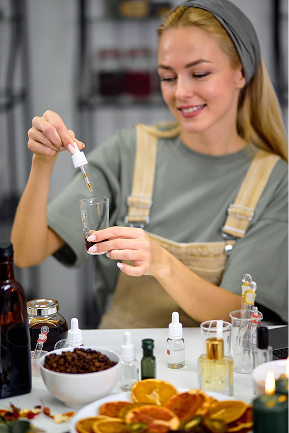
Glass droppers or pipettes, a measuring cup marked in ml, a small funnel, paper blotter strips, labels, and dark glass bottles that protect the perfume from light.
Smell and shortlist
Smell each oil on a blotter strip and keep the ones you love: at least one top, one heart and one base note.
Blend the concentrate
Combine the oils drop by drop, usually base first, then heart, then top, and write down every drop so you can repeat it.

Dilute and rest
Add alcohol or carrier oil to reach the strength you want, seal the bottle and let it rest somewhere cool and dark before you judge it.